July 8, 2026
The Super-Yacht Playbook Is Already Running at One City-Owned Marina. Virginia Key Could Be Next.
Bloomberg just documented what happens when big money takes over South Florida's marinas: bigger boats, higher rates, and family boaters squeezed out. The company at the center of that story is the controlling partner in the Virginia Key deal... and nothing in the 88-page lease stops the same thing from happening here.
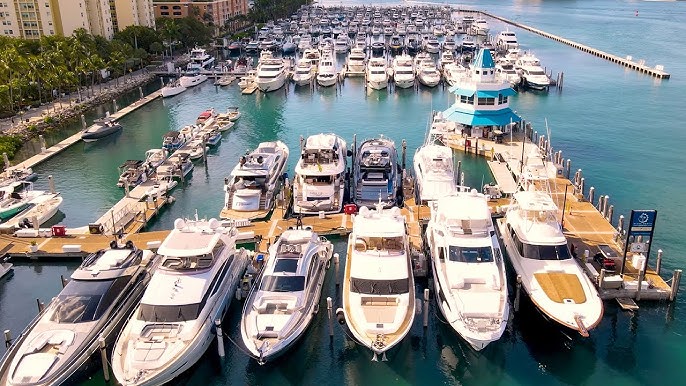
The super-yacht playbook is already running at one city-owned marina. Virginia Key could be next.
On June 26 2026, Bloomberg published a major feature on South Florida's boating boom - and its casualties. The picture it paints should stop every Miami boater cold, because the company at the center of that story is the same company that would control 27.62 acres of our public waterfront for up to 75 years if the November referendum passes.
Read the Bloomberg story here (subscription may be required). Here's what it reports, and why it matters for Virginia Key.
What Bloomberg found
The story documents a squeeze working its way through South Florida's waterways. Since the pandemic, wealth has flooded into Miami and boats have gotten bigger - driving up the cost of marina space, maintenance, and everything else for the everyday boater. Slips in South Florida now typically run $25 to $55 per foot per month and can reach $100. Miami Beach police have pulled roughly 140 abandoned vessels out of Biscayne Bay since October - boats left to rot by owners who couldn't keep up with the costs. Miami-Dade County has 73,000 registered boats, the overwhelming majority of them owned not by billionaires but by middle-class families.
And the marinas themselves are transforming. Bloomberg reports that marinas make more money from large boats, and many are being rebuilt to attract them. At Fort Lauderdale's Pier Sixty-Six, dockage for super yachts runs $8 to $10 per foot per day.
Here's the part Miami needs to read twice. Bloomberg reports that the city-owned Miami Beach public marina - built in the 1980s, a base for working charter captains for decades - is planned for an overhaul. Its operator wants to reconfigure the marina for the bigger boats that bring in more money, including long stretches of super-yacht dockage.
That operator is Suntex Marinas.
The company's chief operating officer put the business logic plainly to Bloomberg: <cite>"There's a disproportionate amount of people that can afford larger boats in southeast Florida."</cite>
And the people who were already there? Bloomberg reports that more than 30 charter operators were evicted from the Suntex-operated Miami Beach Marina after residents of the luxury condos nearby complained about noise - and the captains who remained were hit with new restrictions on their operating hours. One charter co-owner who worked out of that marina for twenty years described it to Bloomberg as a war on working people - the wealthy squeezing out the boaters and small operators who were there first.
That's not our characterization. That's the on-the-record experience of the people it happened to, reported by one of the most careful financial news organizations in the world.
The same company. Our waterfront. Seventy-five years.
Suntex is not a bystander in the Virginia Key deal. The executed lease the City signed names Suntex as a continuing party - §1.3.53 defines "Suntex" as Suntex Marina Investors LLC and Virginia Key SMI, LLC, both Delaware companies, and §10.5 specifically accommodates transfers "in order for Suntex to maintain its REIT status." A REIT - a real estate investment trust — exists to maximize returns for its investors. That is its legal purpose. Suntex's own 2017 proposal to the City boasted that its Florida acquisitions had made it the largest marina owner-operator in the entire state.
So the question every Miami voter should ask is simple: what stops the Virginia Key marinas from going the way of the Miami Beach marina — rebuilt for the biggest boats, priced for the wealthiest owners, with the everyday boaters and small operators squeezed out?
We read the entire 88-page lease looking for the answer.
What's in the lease to stop it? Nothing.
Not rhetoric. A checklist. We searched the executed lease — the binding contract, the one that controls over every promise in the proposal (§1.4) — for any protection that keeps these marinas affordable and accessible to the people who use them today:
- Slip-rate protections or caps? None. The lease contains no limit of any kind on what the operator can charge for wet slips, dry storage, or dockage.
- Affordability covenants? None. The only "affordable" provision in the document (§4.10) is a contribution to an affordable housing fund. Nothing about affordable boating.
- Reserved slips for small boats or existing customers? None. No requirement to preserve any slip mix, honor existing tenancies, or serve everyday boaters at all.
- Protections for charter operators or marine small businesses? None.
- A binding buildout the public can rely on? The lease says the redevelopment plans "will change from time to time" (§5.2) and the City's approval of construction plans is expressly "limited to determination of consistency" with those same revisable plans (§5.3). The City approves construction, not the business model. Nothing in that review governs prices, clientele, or who gets squeezed out.
- Any City leverage later? The term is 75 years — the lease says so in exactly those words — and the renewals belong to the tenant, not the City (§3.2). The City cannot reopen the deal at year 45, year 60, or ever. And under §10.5, the whole venture can be taken public and sold to shareholders without the City's consent.
One more detail worth understanding: the City's rent includes 6% of gross revenues (§4.1.4). That means the more the operator charges — the more it converts toward high-dollar dockage — the more the City collects. Read that again. The financial structure doesn't just permit an upscale conversion. It gives everyone at the table, including the City, a cut of it. The only people with no seat at that table are the boaters, the families, the residents, paying the new rates.
If the redevelopment turns these marinas into a luxury yacht facility, that is not a violation of the lease. It is the lease working exactly as written.
"But the ballot says…"
The ballot voters will see promises an "approximately $80,000,000 privately funded investment" to redevelop the marinas "in an environmentally sensitive manner." As we've documented — and as a lawsuit now before the court alleges — neither of those promises appears in the executed lease. The $80 million figure is nowhere in the document. There are no environmental design requirements matching the ballot's language. The ballot sells voters a vision; the contract doesn't contain it.
Bloomberg's reporting shows us what the actual business logic looks like when a national marina operator takes over a public neighborhood marina in this market. The lease shows us there is nothing on paper that requires anything different here.
This is exactly what a NO vote is for
None of this is inevitable. The referendum only takes effect if City of Miami voters approve it on November 3. A NO vote means the lease never takes effect — and the City goes back to the drawing board, able to seek a deal with real protections: rate accessibility, guaranteed public slips, enforceable investment commitments, current-market rent, and terms a 2026 voter would actually recognize as fair.
Three things you can do right now:
- Email your Commissioners before July 23 — the last Commission meeting before the misleading ballot language locks. Our one-click tool on the Homepage opens a pre-written email to all five Commissioners, the Mayor, the City Manager, and the City Attorney. Send it now →
- Pledge to Vote NO on November 3 — and get the vote-by-mail and early-voting reminders that make sure your vote counts. Take the pledge →
- Forward this to every Miami boater you know. Only City of Miami residents can vote on this. The people with the most at stake — the families with a boat at Marine Stadium Marina, the small operators, the weekend fishermen — need to see what's coming before they vote on it.
Miami's waterfront has always belonged to everyone. Whether it stays that way is on the ballot.
Sources: Michael Smith, "A Super Yacht Armada Came to Miami, Leaving a Marine Graveyard in Its Wake," Bloomberg, June 26, 2026 (all Bloomberg-attributed facts paraphrased from that report; one quotation of Suntex COO Rich Carter as published). Lease citations are to the executed Lease Agreement between the City of Miami and Virginia Key, LLC attached to City Resolution 26-0254: §1.3.53, §1.4, §3.2, §4.1.4, §4.10, §5.2, §5.3, §10.5. References to the pending lawsuit refer to allegations in Rickenbacker Marina, Inc. v. City of Miami, Case No. 2026-013392-CA-01, 11th Judicial Circuit, Miami-Dade County; no court has yet ruled.